
Camera and library capture
Take a photo in the mobile app or choose an existing image from the device library.
Adjuster Copilot keeps required-photo guidance, capture, categories, captions, ordering, upload status, and report use inside the same claim inspection workflow.
Product screenshots use approved demonstration data. Categories and captions remain subject to adjuster review.
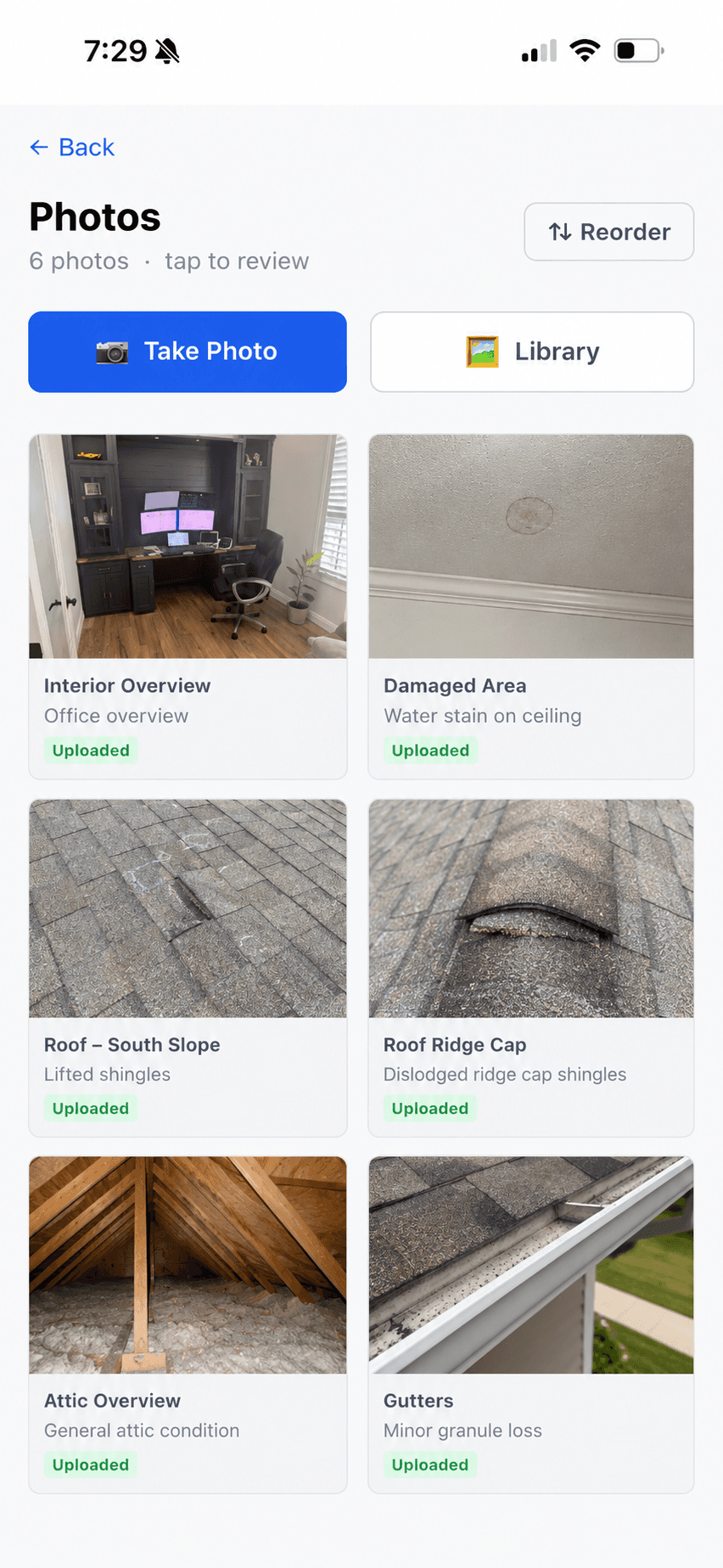
Every photo lands against the category it belongs to, so the set builds itself while you work.
Take a photo in the mobile app or choose an existing image from the device library.
See covered and missing categories, capture from a missing item, or record why a required view cannot be photographed.
Choose a category before saving, add an optional caption, and edit either value from photo details.
Review the gallery order and explicitly save a new sequence for the inspection.
Keep captured photos in local device storage and queue them with the inspection when connectivity is unavailable.
Use server-confirmed photos in the inspection photo sheet and full inspection report.
Different carriers want different views. The required set loads with the claim, so you're never guessing which list applies.
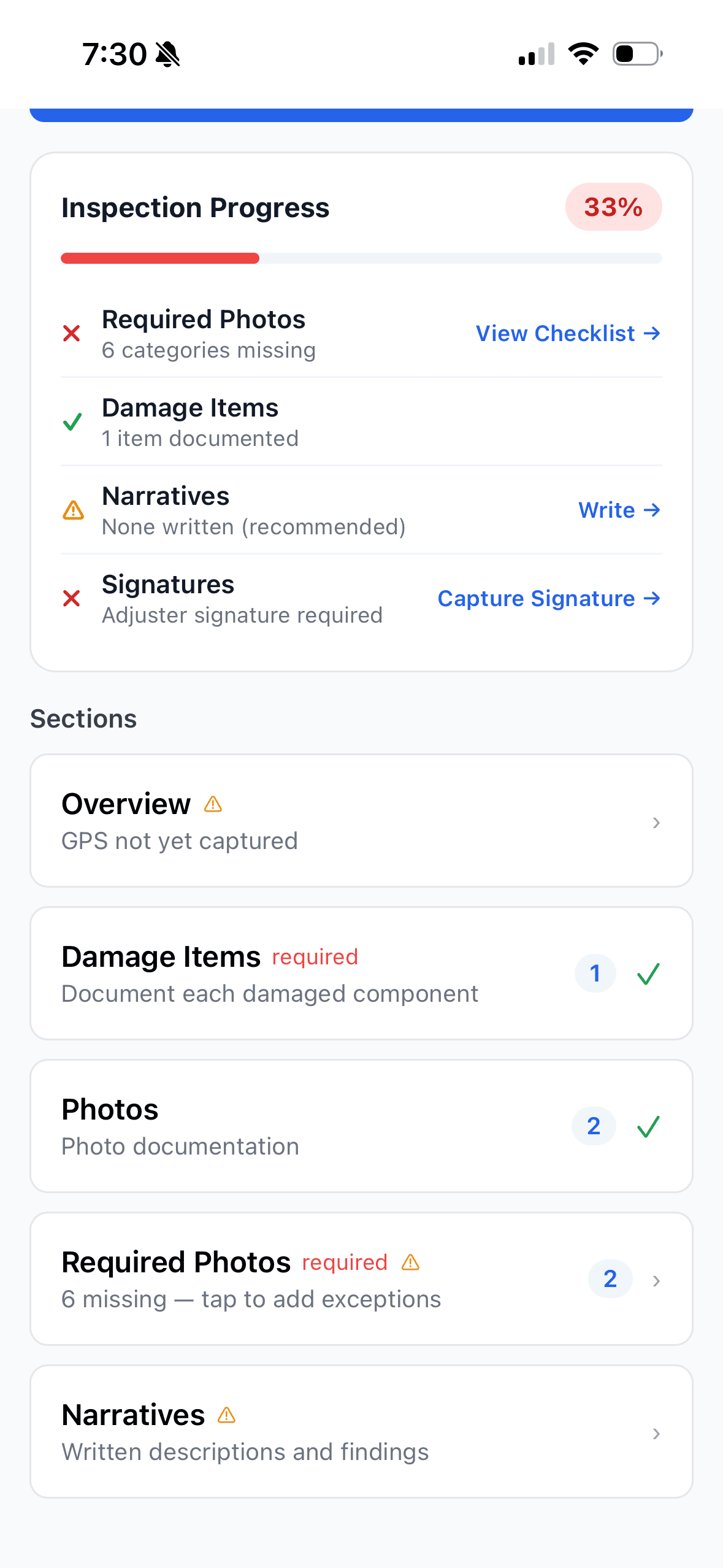
Required categories come from the inspection profile, client, and loss type. The picker puts those first, with supplemental types right behind them.
Every required category shows its state at a glance. Tap an uncovered one and capture opens with that category already selected.
Record an exception against the category — a locked crawlspace, an unsafe roof — so the gap is documented rather than silently missing.
From the first shot at the property to the organized photo sheet.
See which configured categories are covered, missing, or documented with an exception reason.
Use the device camera or photo library. Starting from a missing category carries it into capture for review.
Choose the required category, add an optional caption, and verify both before saving.
Edit the category or caption from photo details and set the intended gallery order.
Distinguish Saved offline, Waiting to sync, Uploading, Uploaded, and Upload failed.
Generate the photo sheet or inspection report after synchronization.
The current gallery displays each photo with its human-readable category, optional adjuster-entered caption, and upload status. Adjusters can open a photo for closer review and edit its category or caption.
Reordering the gallery saves to the server, so the sequence you set is the sequence the photo sheet uses.
Shoot with no signal and photos hold on the device, then upload when you reconnect — with a clear label at every stage.
The compressed photo is retained locally but has not reached the server.
Photo metadata or binary upload is queued for the inspection.
The app is actively sending the photo file.
The server has confirmed the binary upload.
The file needs retry or user attention before handoff.
Your categories and their configured order carry straight into the generated photo sheet.
When an applicable inspection profile defines photo-sheet categories and display order, the generated sheet uses that sequence. Categories configured not to appear are omitted, and unmatched photos move to a final miscellaneous group.
Without applicable profile ordering, output keeps the saved photo sequence. Optional empty categories are skipped; configured required categories can remain visible as missing.
See how documented evidence informs narrative drafting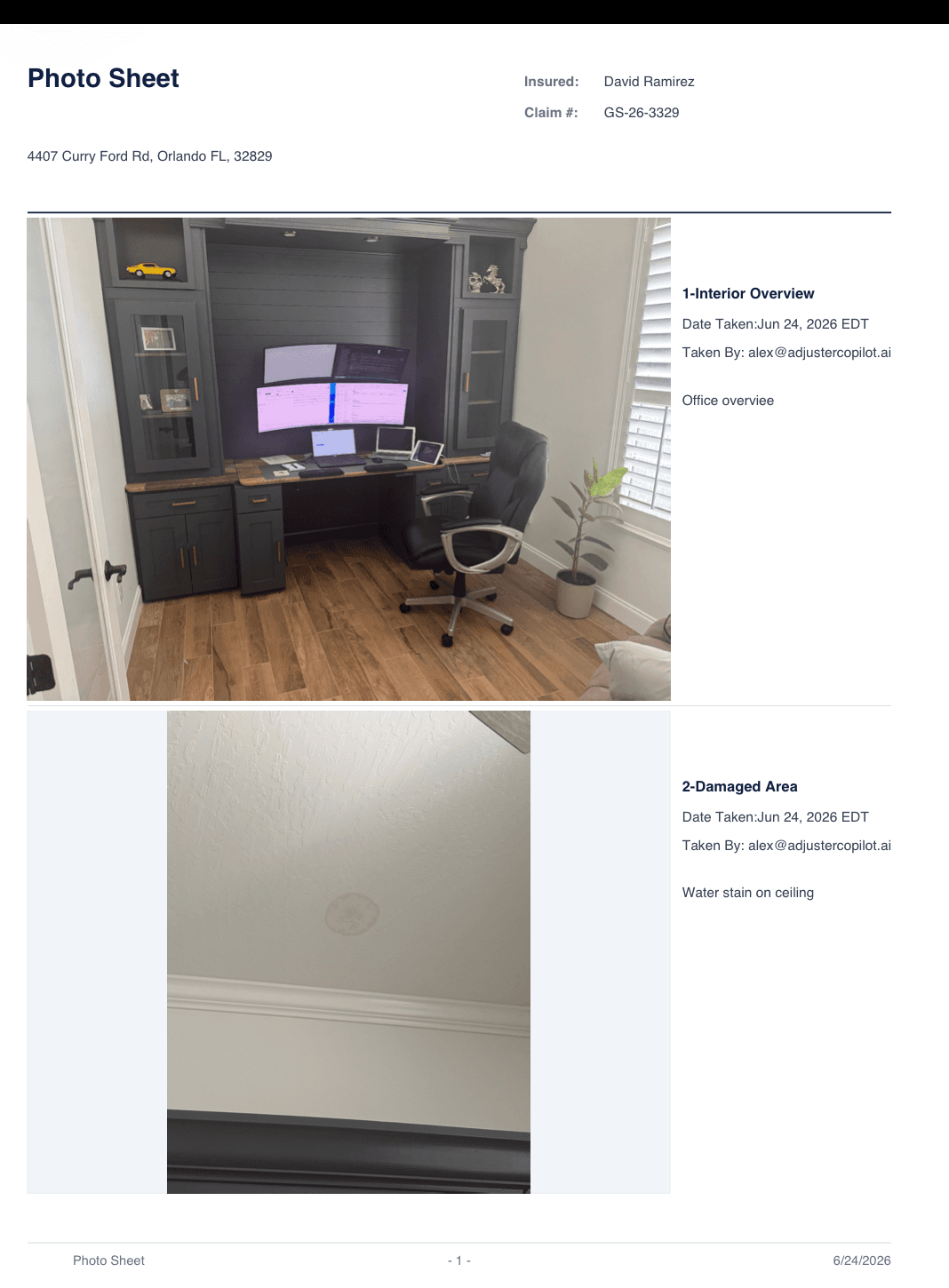
Take a photo in the app or choose one from your library. On the web app you attach files instead of shooting directly.
Photos are converted to JPEG and sized by type, so the assembled sheet stays quick to open and share.
Reconnect with the inspection open and queued photos run. The photo sheet builds from uploaded files.
Start a trial and photograph one practice inspection — required categories, capture, upload states, and the assembled photo sheet.