Inspection profiles
The applicable profile can connect an inspection type with configured questionnaire, photo, narrative, and workflow behavior.
Follow a configured digital inspection workflow that keeps questions, required photos, evidence, progress, synchronization, narrative review, and report readiness connected to the claim.
Screenshots show the current product with synthetic demonstration data.
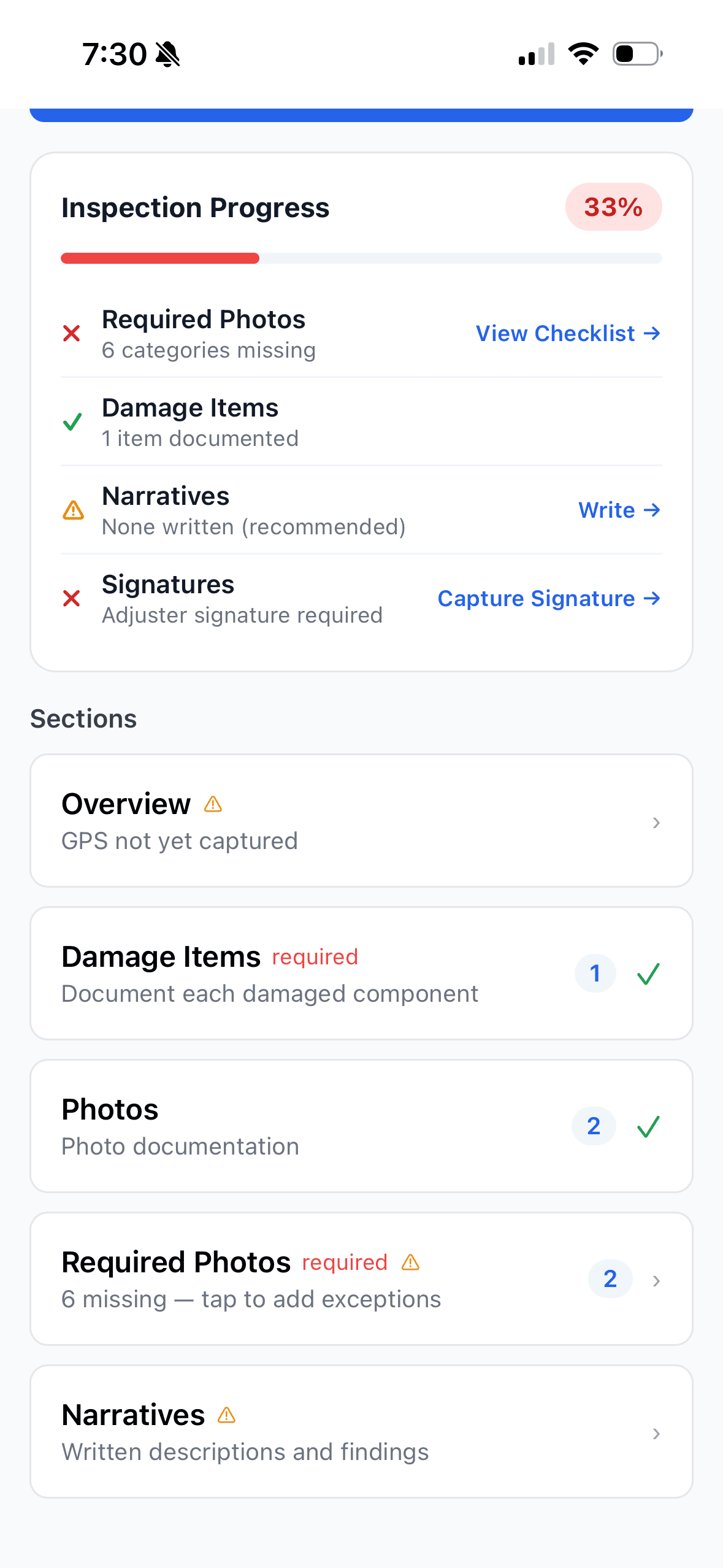
Sections, questions, required photos, and narrative templates arrive already configured — so you inspect instead of remembering whose rules apply.
The applicable profile can connect an inspection type with configured questionnaire, photo, narrative, and workflow behavior.
The inspection view distinguishes required, incomplete, recommended, and completed areas instead of presenting an unstructured form.
Applicable question templates and required-answer states guide what the adjuster records for the inspection.
Configured photo categories show covered, missing, or exception states and link directly into evidence capture.
Visible section indicators and a weighted readiness display help locate unfinished work while a separate completion gate preserves hard blockers.
Downloaded inspections support local answers, notes, damage items, photos, checklist decisions, and narrative text through connectivity gaps.
Questionnaire, required photo set, narrative template, and report behavior travel together, so a client's expectations land the same way every time.
Requirements come from the profile and templates configured for that client and loss type. Firms usually walk through this during setup, so the standards an adjuster sees in the driveway are the ones the client actually expects.
Review current configuration capabilitiesEach stage advances the same inspection record instead of creating separate notes, camera-roll evidence, and report inputs.
Start from the claim and load the applicable inspection data before entering an area with unreliable connectivity.
See the inspection modules, required states, recommended work, and current progress before beginning field capture.
Complete the configured questions that apply to the inspection and review any required answers that remain missing.
Record damage items, notes, required photo categories, supplemental photos, and applicable signatures in the inspection.
Use section indicators and the readiness display to locate unfinished work, then review the separate completion requirements before submission.
Return to the affected inspection with the app open, confirm queued work reaches the server, and resolve pending or failed items.
Generate an AI-assisted narrative from supported field evidence, then edit and approve the draft rather than treating it as a completed decision.
After synchronization, verify the documented evidence and reviewed narrative used by the current report and photo-sheet workflow.
Guidance connects the required work, while the dedicated feature owners explain each capture and synchronization behavior in depth.
Applicable questions appear inside the inspection. Required answers contribute to the configuration/completion state; the response remains the adjuster's documented observation.
Required categories show coverage and missing states. Adjusters can capture in context, add captions, organize the gallery, and record an exception where supported. A category state is not a guarantee that the image is sufficient.
Review the photo documentation workflow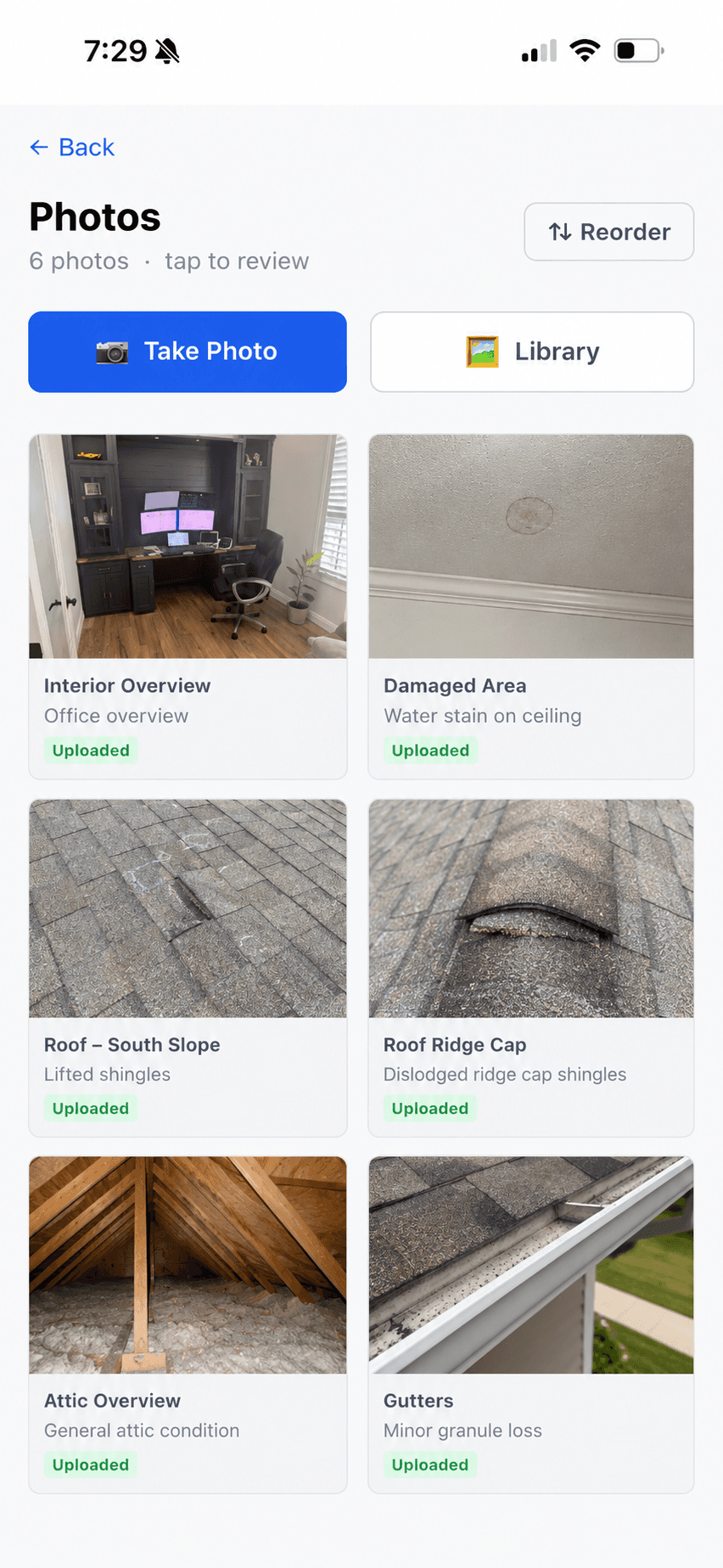
A readiness meter points you at the remaining work, and the required items decide when the inspection is ready to submit.
Required, incomplete, recommended, and completed states send you straight to the part of the inspection that still needs attention.
Partial photo coverage moves the meter incrementally; other categories count once their requirement is satisfied.
Required photos, questions, damage items, narrative, and signature are what actually open submission — so nothing incomplete slips through.
The narrative starts from your own documentation, and the inspection report assembles from the same record. You review both.
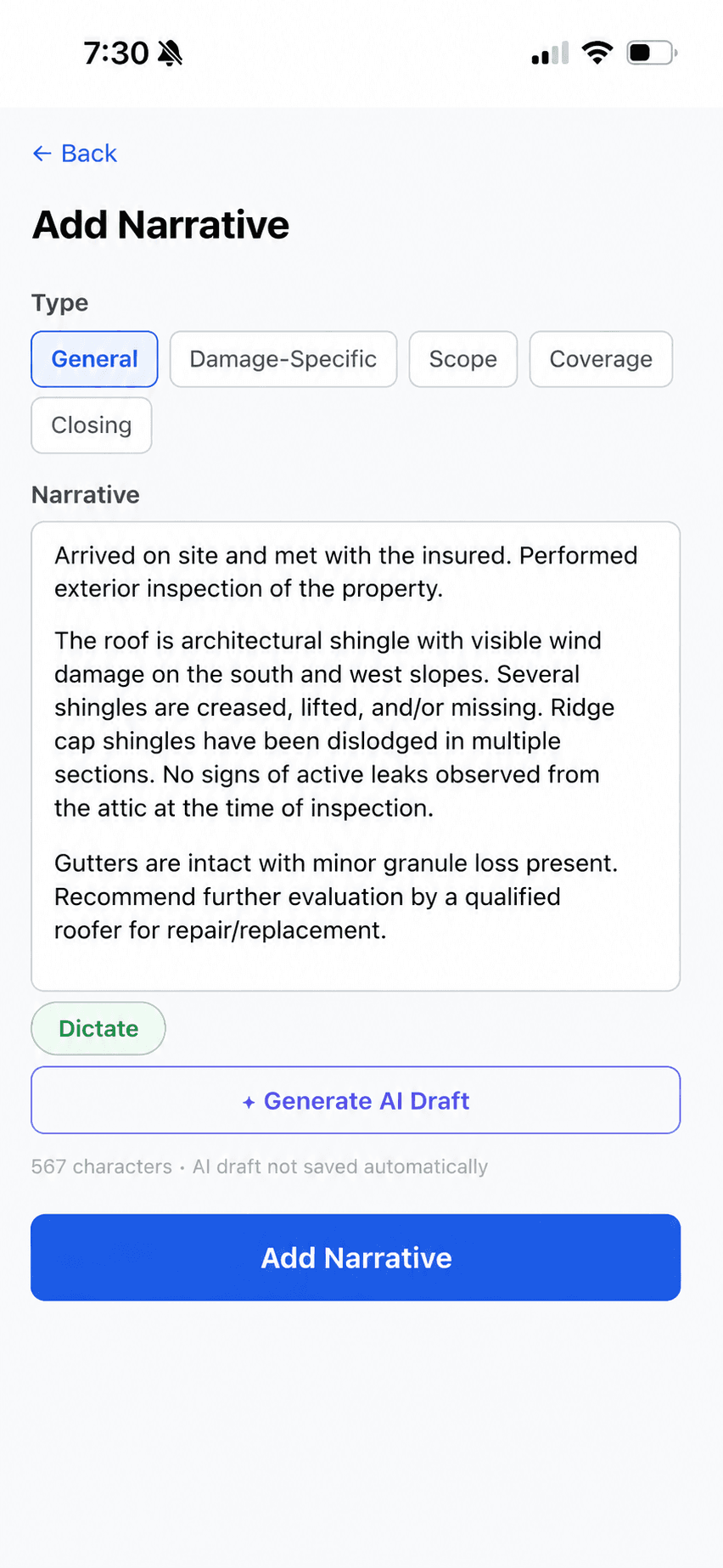
Supported inspection evidence can produce an editable narrative draft. The adjuster reviews the language, corrects the facts, and decides what belongs in the file. After required synchronization, current report and photo-sheet actions use the available server-confirmed evidence.
Understand AI narrative generation and human review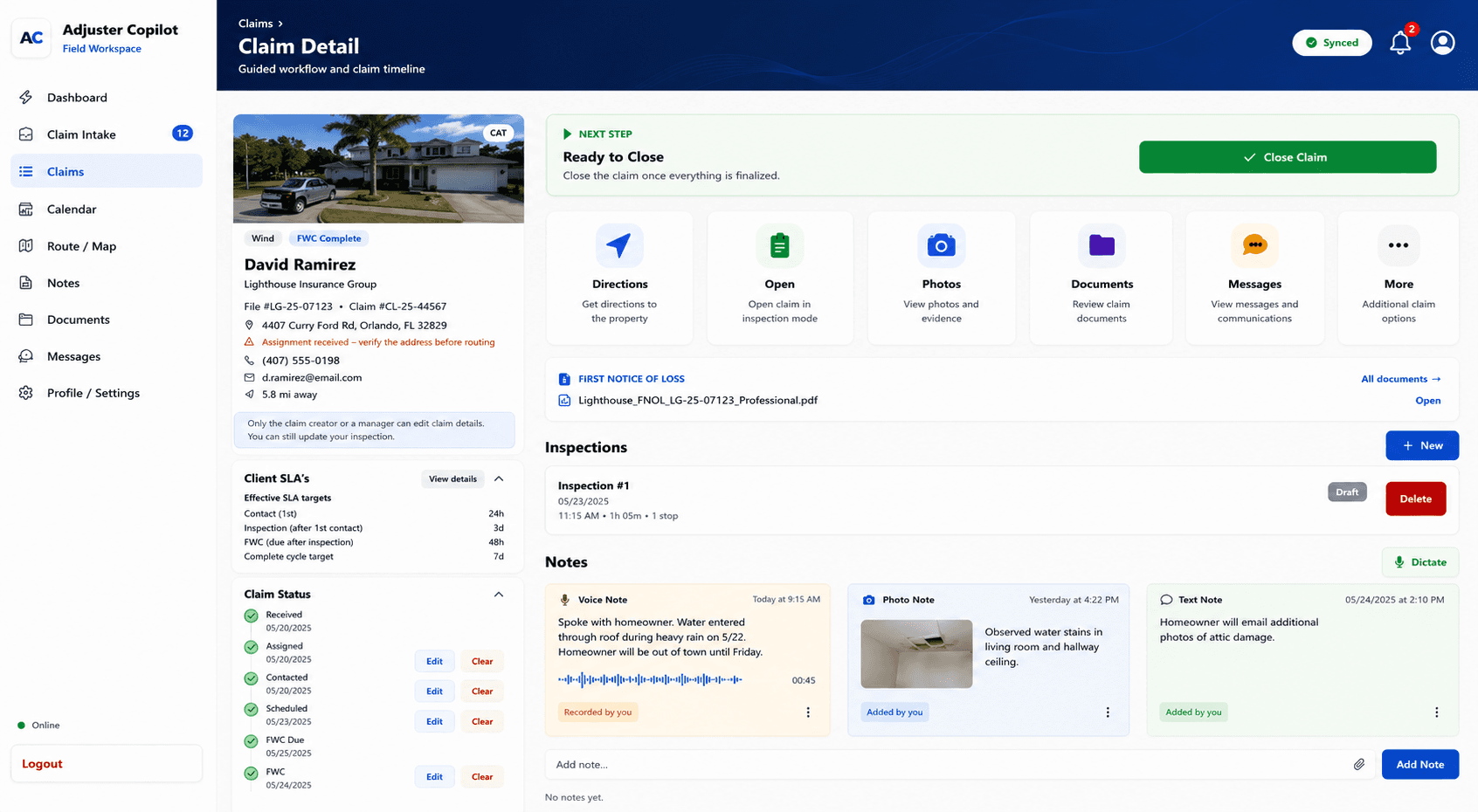
The workflow surfaces what each client requires and shows where you stand against it. You observe the property, decide what evidence matters, and approve every narrative before it enters the file. The judgment stays yours — Copilot just makes sure nothing gets forgotten in the driveway.
Supported field documentation can continue after the inspection data has been downloaded. Final synchronization, server-confirmed uploads, and connected report actions still require connectivity.
The applicable inspection profile, questionnaire, and photo requirements can vary by configured client, loss type, and inspection type. This is configured behavior, not a carrier integration or automatic carrier enforcement claim.
The checklist shows configured categories as covered, missing, or documented with an exception reason. The adjuster still reviews image relevance, clarity, labels, and upload status.
Supported changes are stored locally and queued. When service returns, reopen the inspection, allow synchronization to run, and verify whether each item is pending, synced, or failed.
Yes. The current AI capability produces an editable narrative draft from supported inspection evidence. The adjuster must review and correct it before file use.
Start a trial and follow one guided inspection end to end — profile resolution, sections, questionnaire and photo requirements, offline states, narrative review, and report preparation.