Firm owners
Define a repeatable inspection approach without relying on every adjuster to reconstruct the firm’s standards from memory.
Configure what a complete file means for each client. Copilot carries those requirements to the property and brings back a file that matches them.
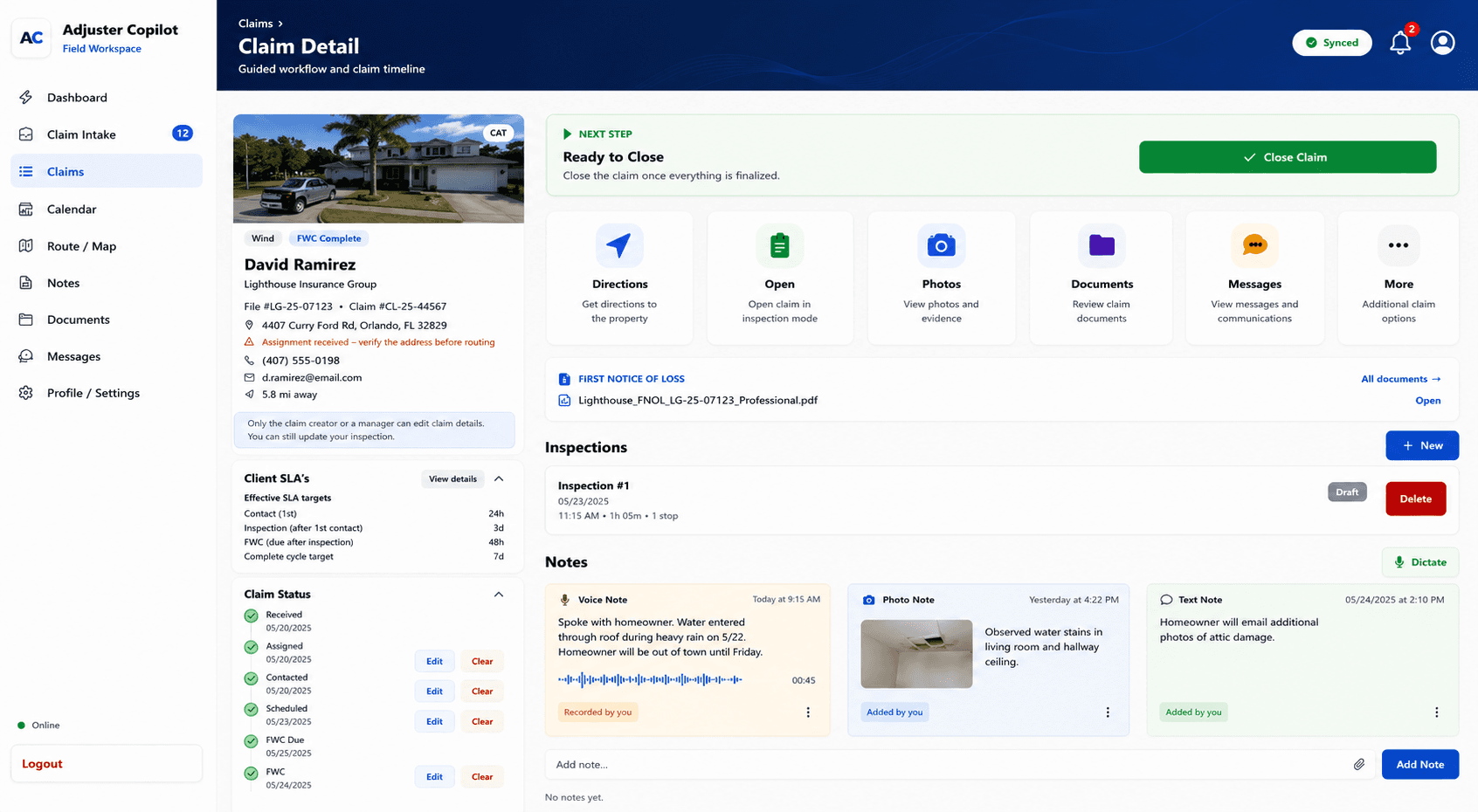
Current product screens shown with synthetic demonstration data.
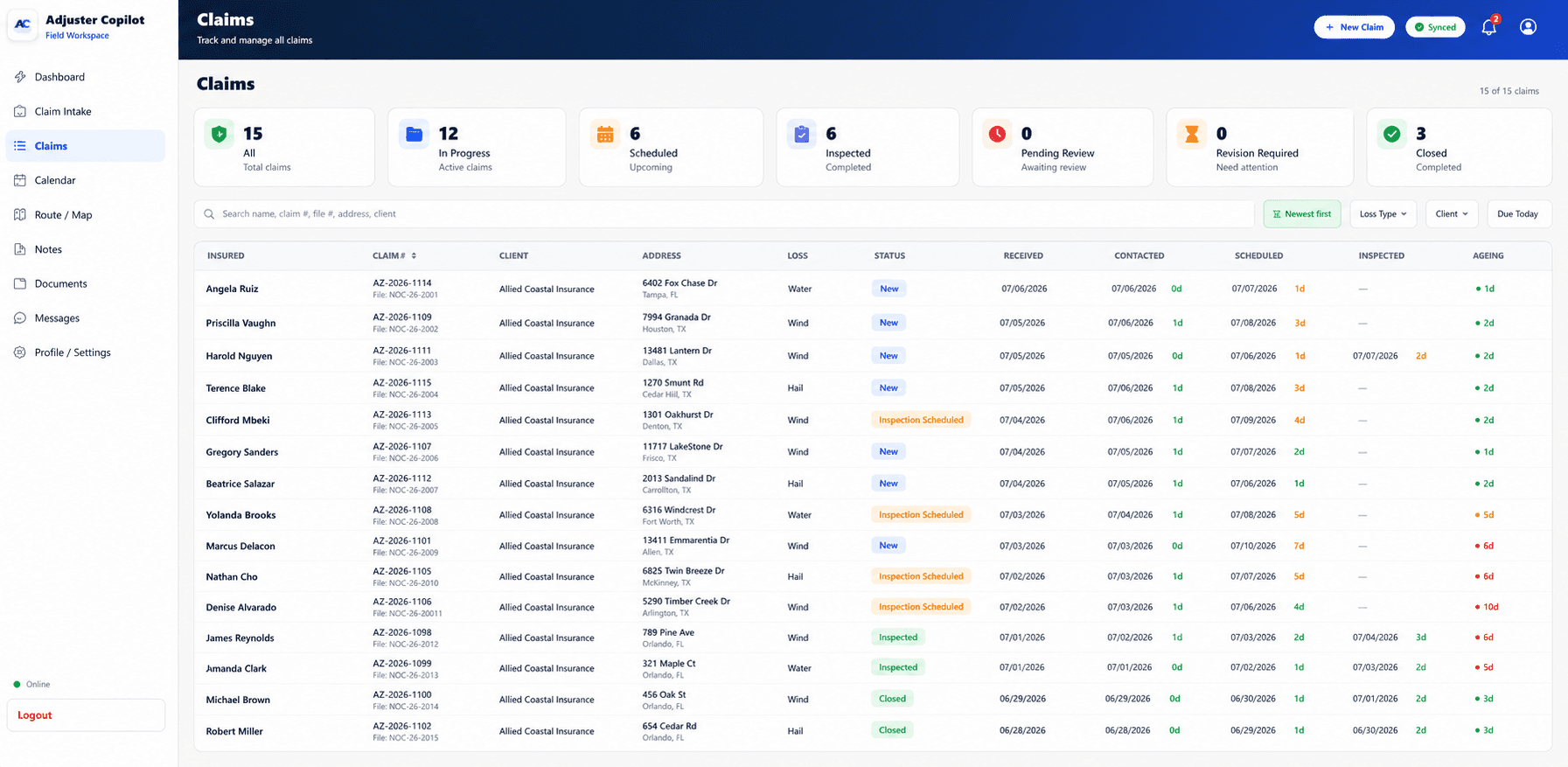
The same structured field file answers different questions depending on who opens it.
Define a repeatable inspection approach without relying on every adjuster to reconstruct the firm’s standards from memory.
See claim and inspection status in the desktop workspace, then open the underlying file when follow-up is needed.
Review a structured file built from required questions, photo categories, notes, and a narrative the adjuster has already read and approved.
Give adjusters a guided sequence that carries the configured requirements into the property, including when connectivity is limited.
Configure what a complete file means for each client once, and every adjuster arrives with those requirements already in front of them.
An inspection profile brings together the applicable questionnaire, required photo set, narrative template, and reporting rules.
The adjuster opens the claim and downloads the inspection data needed for supported offline fieldwork.
Required questions, inspection items, and photo categories remain visible as the adjuster documents the property.
Photos, labels, captions, notes, and answers stay associated with the claim and inspection rather than a separate camera roll.
Pending work uploads when connectivity is available. The app shows pending, successful, and failed synchronization states for user review.
Authorized users can review claim details and status while the adjuster verifies the narrative, photo sheet, and inspection report.
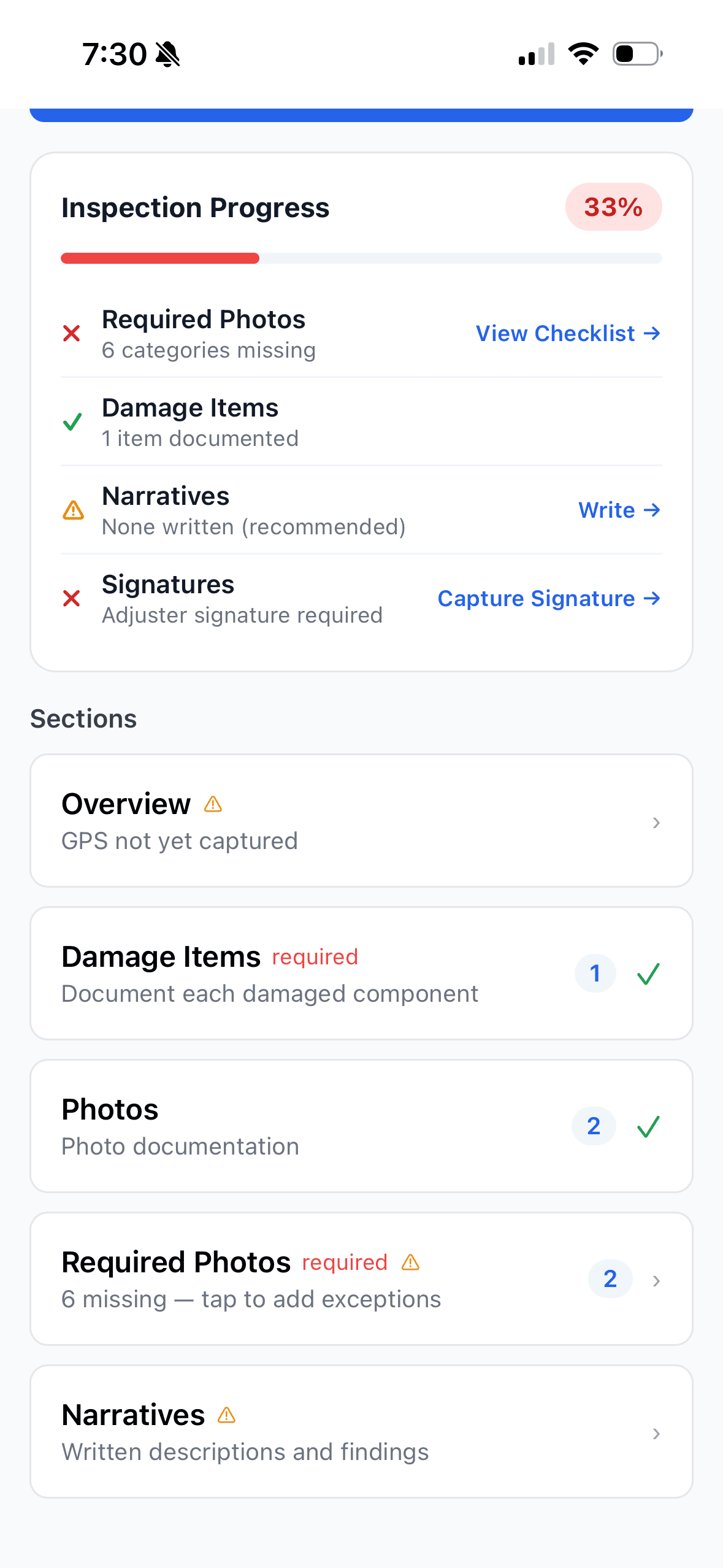
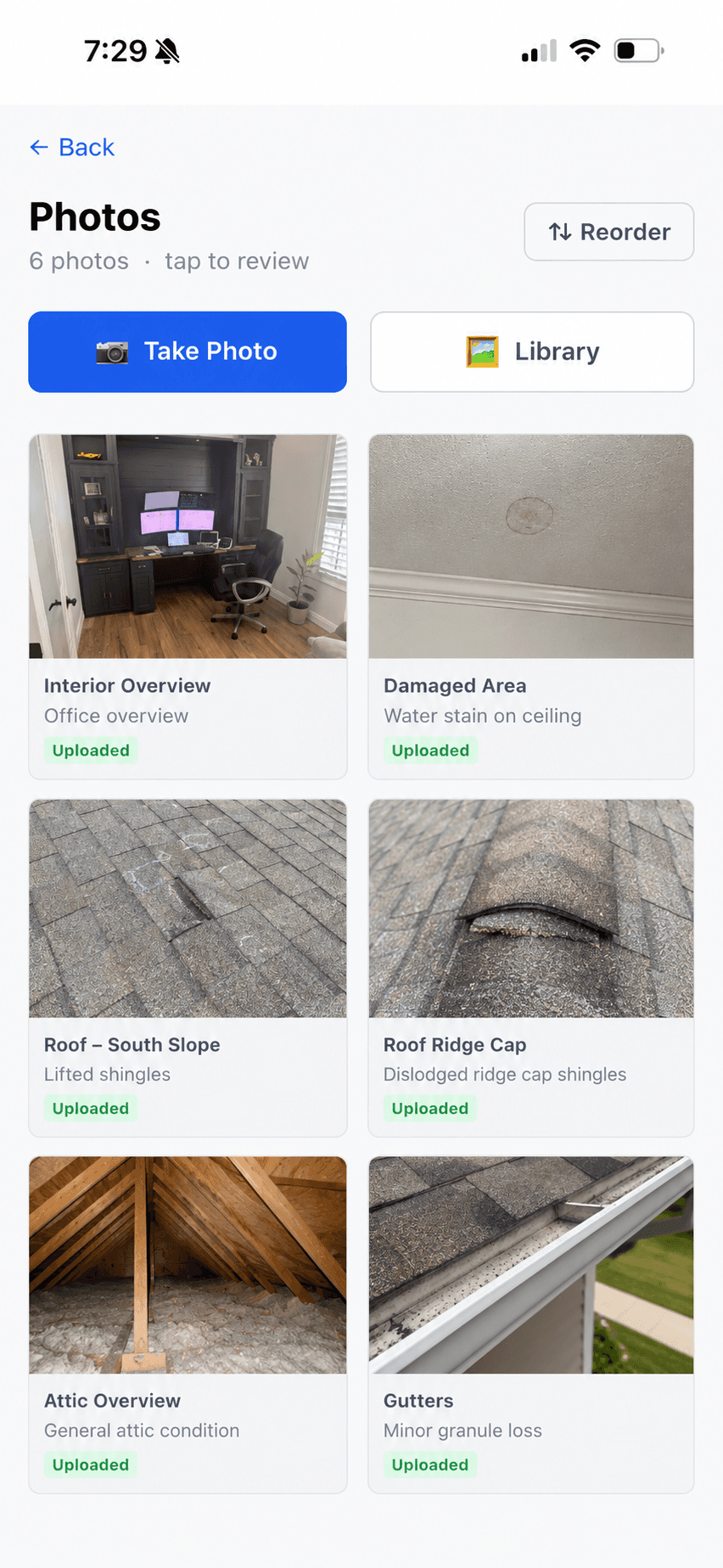
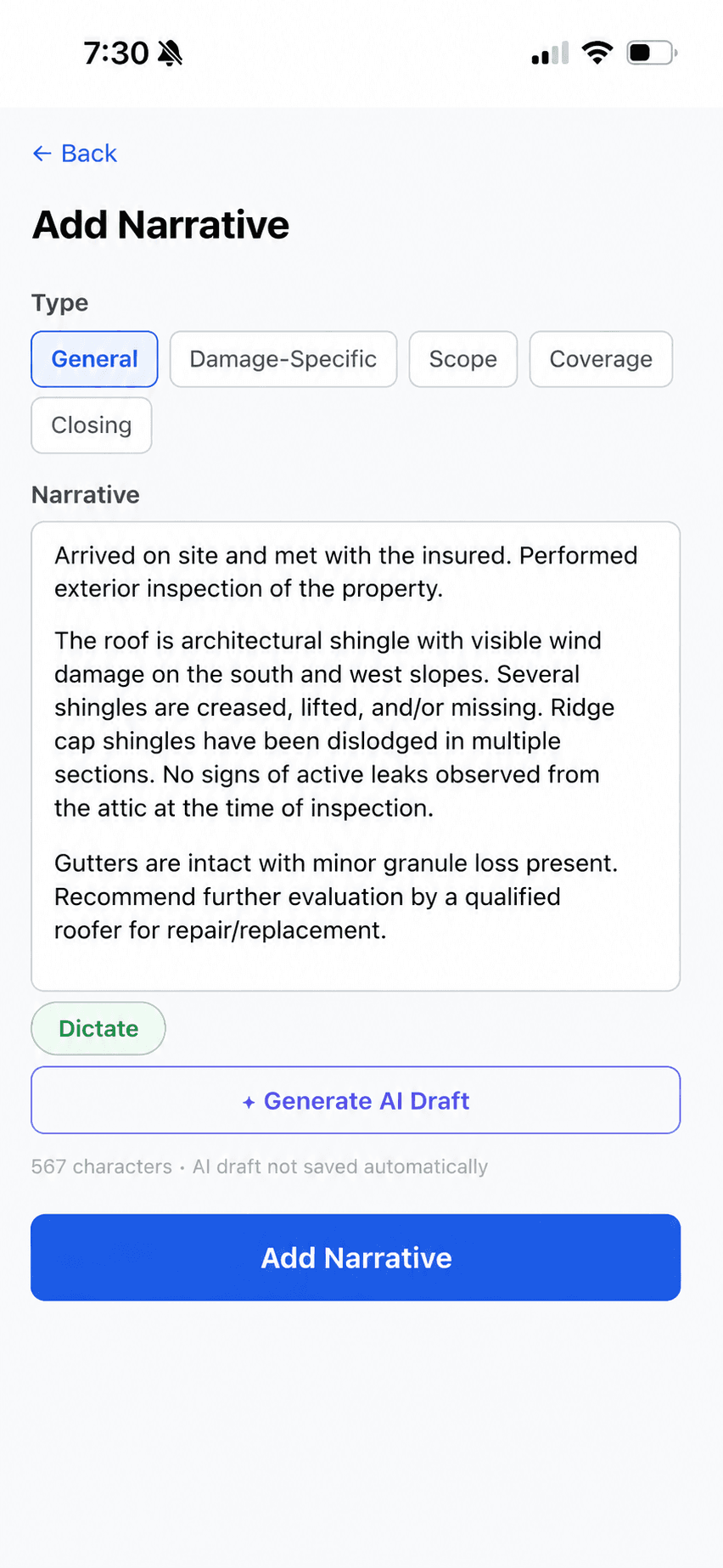
Say your firm handles wind claims for a carrier client — call them Northstar Wind. Here's how their standards travel with every assignment. (Illustrative example; configuration varies by client and inspection profile.)
Northstar Wind exists once in your registry — contacts, expectations, and the inspection profile that applies to their assignments.
Their question set loads with the claim: slopes, test square, collateral damage, and the rest of what they expect answered.
Four elevations, roof edge, test square, soft metals — tracked on-site so the adjuster sees gaps before leaving.
Their narrative template shapes the AI draft, and the assembled report follows their reporting expectations.
A different client's assignment loads different requirements. The adjuster inspects; Copilot remembers the standards.
Configuration varies by client, loss type, and inspection profile.
Inspection profiles combine configured questions, photo requirements, narrative templates, and report behavior for the applicable work. Profiles are authored from the desktop web app.
Guided question sets make the expected documentation visible during the inspection.
Configured photo sets prompt adjusters to collect and organize the expected views by category.
Progress and required items stay visible through a consistent field sequence.
Downloaded claim and inspection data, supported answers, notes, and photos remain available on the device until synchronization can occur.
Captured details and organized photos carry into the current assembled report and photo-sheet workflow.
Field notes can produce an editable narrative draft; an adjuster reviews and approves the wording.
The desktop workspace shows claim, inspection, review, revision, and report states with search and filters.
Search the claim list, check where each inspection stands, and open the record itself — so follow-up starts from the file instead of a phone call.
Open a claim to review its inspection status, photos, notes, messages, documents, and generated reports. Search and status filters help locate work that needs a person's attention.
Configured behavior follows the client, loss type, and inspection profile — worth walking through together during setup. Everything described here as current is live today. What's in development and planned is labeled — never sold as available. Last reviewed 2026-09-01.
Talk through your clients and documentation requirements, or start a trial and configure a profile yourself.