
Open saved claim and inspection details
Assignments and inspection data already downloaded to the device remain available when the connection drops.
Adjuster Copilot is an offline claims inspection app that keeps downloaded assignment data and new field work on the device, then shows exactly what is pending, syncing, synced, or failed.
Screenshots show the current product with synthetic demonstration data.
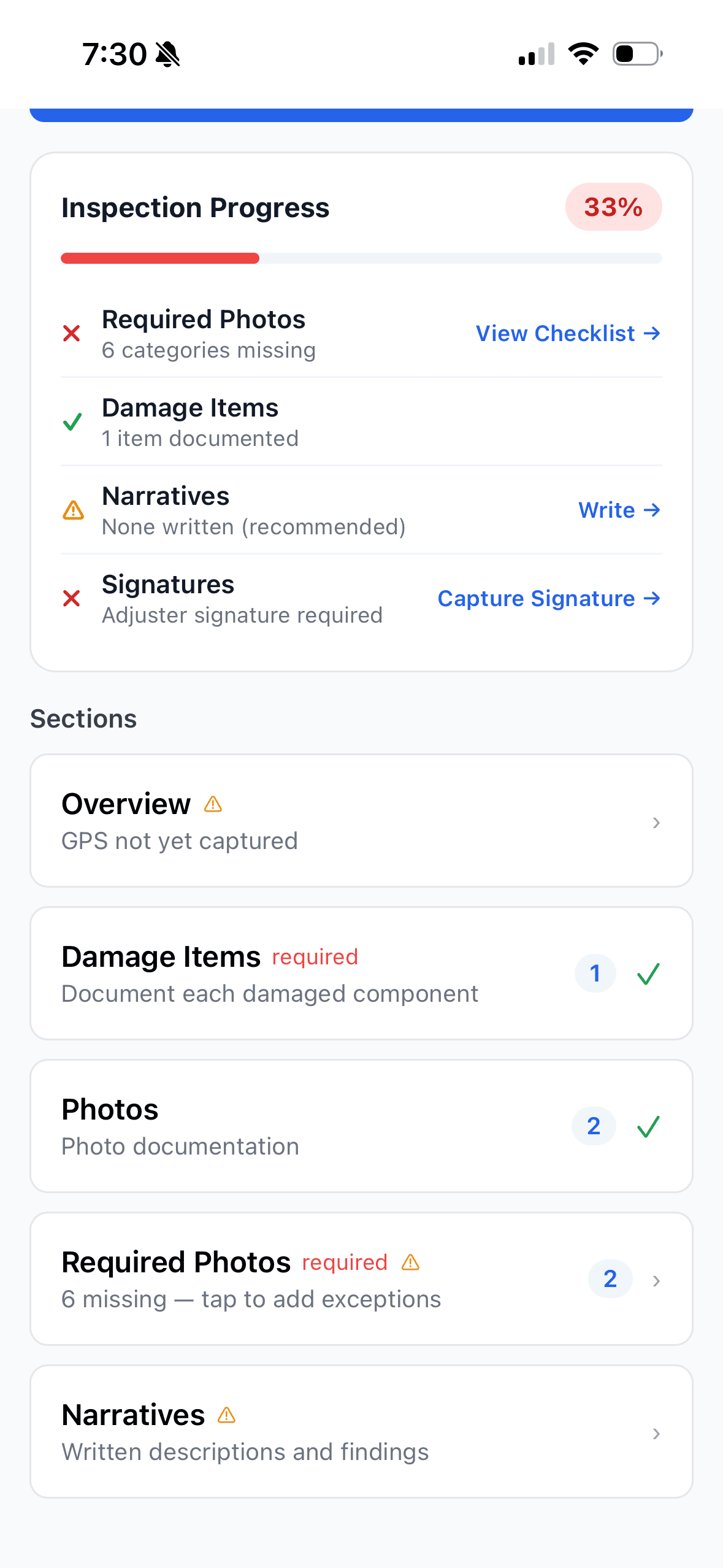
Once the claim is on the device, the inspection carries on — basement, attic, or the far end of a CAT zone.
Assignments and inspection data already downloaded to the device remain available when the connection drops.
Record and edit inspection details, questionnaire responses, damage items, photo-checklist decisions, and narrative text.
New photos are retained locally with their inspection context and wait for their metadata and files to upload.
Signatures can be collected on the device and queued with the rest of the inspection work.
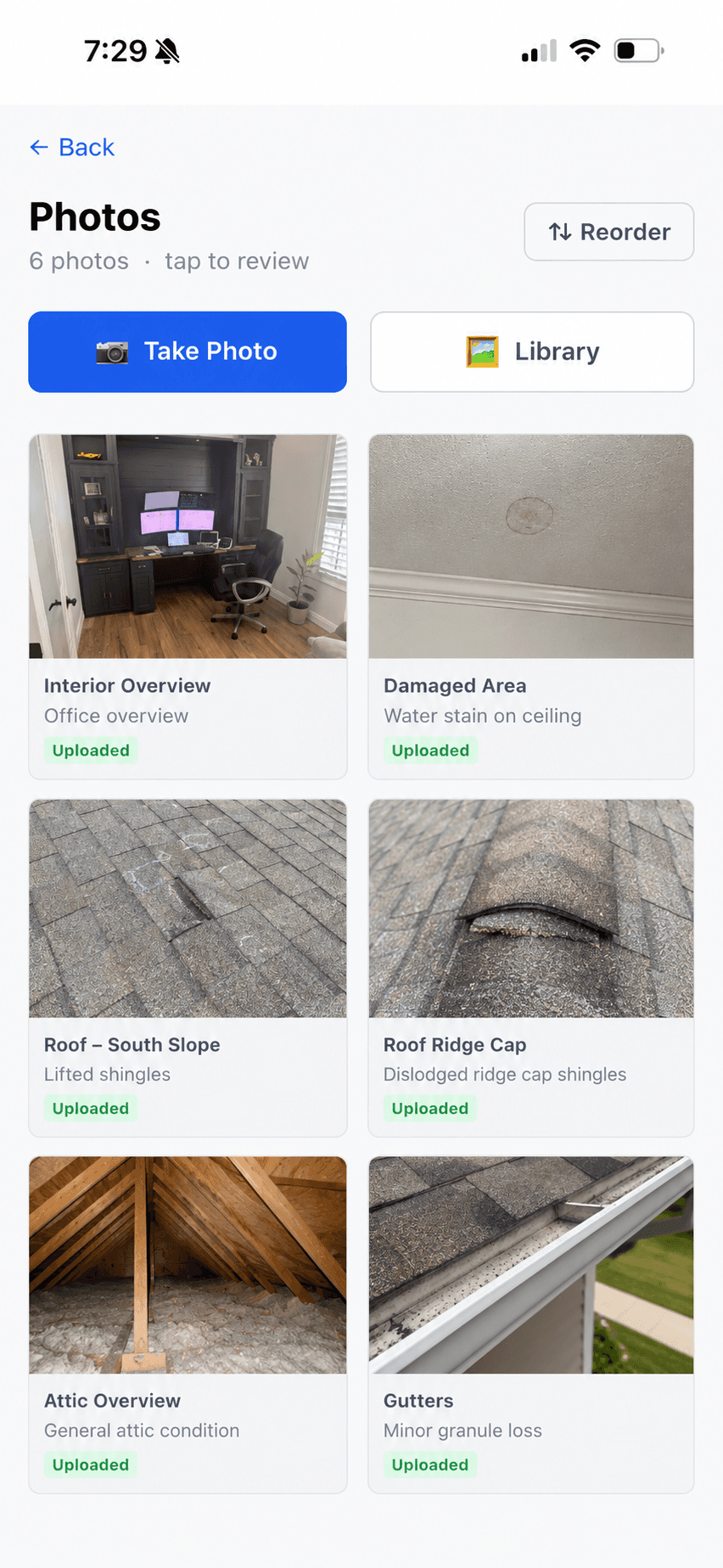
The local inspection record holds downloaded inspection data and queued changes. Captured photos retain a local file and their inspection metadata while upload is pending. Offline records are isolated to the signed-in user on that device.
Get back in range with the inspection open and the queue runs on its own — then each item reads as synced, so you know the office has it before you move on.
Download in the morning, sync when you're back in range. Everything between those two moments works without a signal.
Existing narrative text can be created or edited offline and queued. Generating a new AI draft is a connected action. Learn what the current AI does on the AI narrative page.
Download, inspect, queue, reconnect — and confirm the server has everything before you close the day.
Load the claim and inspection before entering a dead zone. If an inspection has never been downloaded, the app asks you to connect once rather than showing incomplete data.
The app continues from saved inspection data. New field entries are written locally and queued instead of depending on a live request for every action.
Offline and pending indicators separate device-saved work from server-synced work. Photo items also identify locally saved, upload-pending, uploading, uploaded, and failed states.
When connectivity returns while the inspection home screen is active, Adjuster Copilot attempts to flush that inspection’s queue. Returning the app to the foreground can also trigger the attempt.
Wait for the synced state before treating the handoff as complete. If the app shows pending or failed work, use Sync Now or Retry from the affected inspection.
The current app includes a Sync Status destination for offline changes and uploads. This screenshot uses approved demonstration data and shows the current settings entry—not a conceptual mockup.
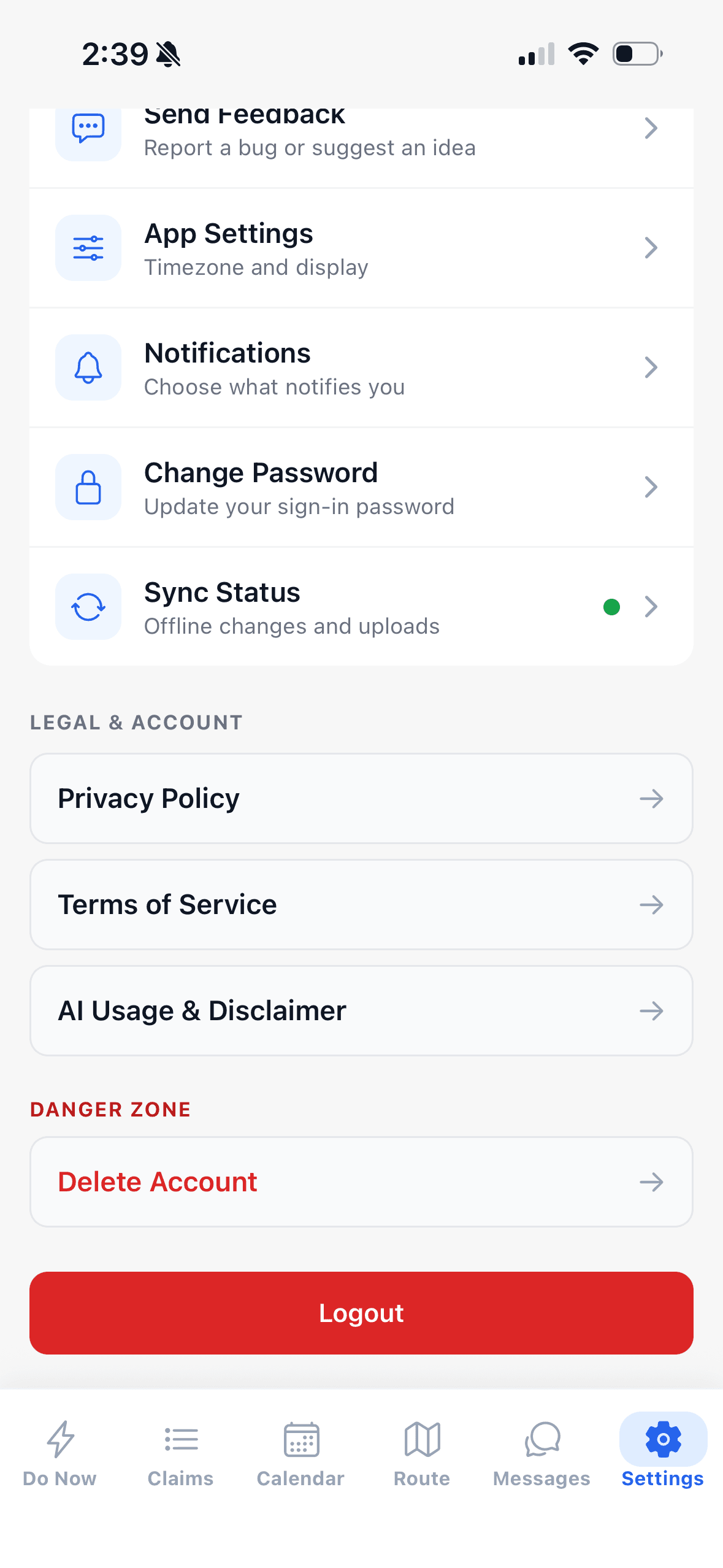
Local, moving, complete, or needs attention — every piece of the inspection carries a state you can read at a glance.
Offline — changes saved on this device
The app identifies the lost connection and shows that work is saved on this device. A count appears when changes are waiting.
Changes pending sync
Queued changes remain visible as waiting to sync. On the inspection home screen, Sync Now is available when connected.
Syncing…
While the active inspection queue is being sent, the inspection home screen shows that synchronization is in progress.
All changes synced
A successful flush shows that all changes are synced. The temporary success banner then clears.
Sync failed — Retry
A failed item is shown separately from pending work. Open the affected inspection and use Retry; a failed item is not presented as safely synced.
Start a trial, put the phone in airplane mode, and watch the offline, pending, successful, and failed states behave against a practice inspection.